


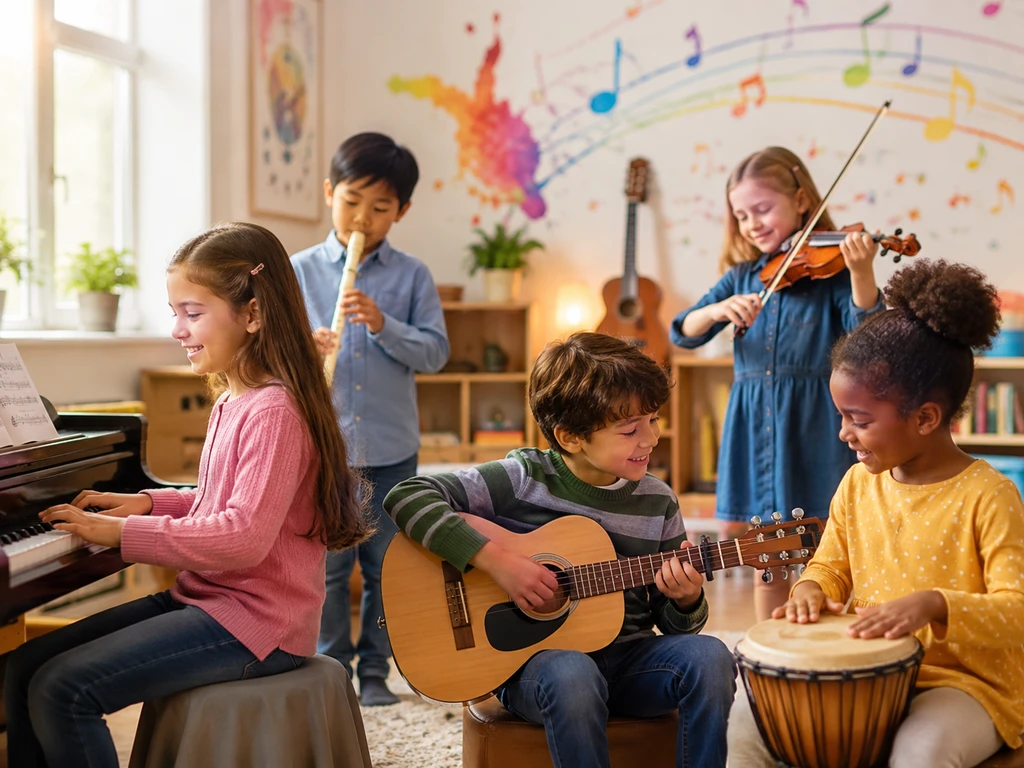
Music is much more than learning how to play an instrument or sing a song. For children, music can become a powerful way to explore imagination, express emotions and develop artistic confidence from an early age.
When children join music lessons, they begin to understand rhythm, melody, sound and movement. These experiences help them connect with art in a natural and enjoyable way. Whether they are learning piano, guitar, violin, voice, handpan, ukulele or flute recorder, every lesson gives them a new creative tool.
Music gives children a safe space to express feelings, explore ideas and discover their own artistic voice.
Why Music Education Matters for Children
Children are naturally curious. They love sounds, patterns and movement. Music education uses this curiosity and turns it into focused learning. Through music, children can improve their listening skills, memory, patience and self-expression.
At a music academy, children also learn how to work with a teacher, follow simple instructions and practice step by step. These small habits can support their growth in school, social life and other creative activities.
Key Benefits of Music Learning for Children
- Improves creativity and imagination
- Builds confidence through performance and practice
- Supports emotional expression
- Helps with focus, patience and discipline
- Encourages social connection in group classes
- Strengthens listening and memory skills
How Music Builds Artistic Thinking
Artistic thinking means seeing the world with more creativity and emotion. When children learn music, they do not only repeat notes. They learn how to feel the mood of a song, understand soft and strong sounds and create meaning through performance.
This artistic awareness can affect other areas of their lives too. A child who learns rhythm may become more interested in dance. A child who sings may become more confident in storytelling. A child who plays piano or violin may start noticing patterns, emotion and structure in other forms of art.
Music Helps Children Express Emotions
Some children may find it difficult to explain their feelings with words. Music gives them another way to communicate. A happy melody, a calm rhythm or a powerful song can help children understand and express emotions in a healthy way.
A child does not need to become a professional musician to benefit from music. The real value is in creativity, confidence and personal growth.
Music Lessons Can Improve Confidence
Learning music teaches children that progress takes time. At first, a song may feel difficult. But after practice, they can hear their own improvement. This creates a strong sense of achievement.
Performing in front of a teacher, family or small group can also help children become more comfortable sharing their talents. Over time, this confidence can support public speaking, teamwork and classroom participation.
Simple Steps in a Child’s Music Journey
- Exploring different sounds and instruments
- Learning basic rhythm and melody
- Practicing short songs and exercises
- Building confidence through repetition
- Sharing music with family, friends or classmates
Choosing the Right Music Program for Your Child
Every child is different. Some children enjoy singing, while others may feel more connected to instruments like piano, guitar, violin, ukulele, handpan or flute recorder. A good music academy helps families choose the right program based on age, personality and interest.
For younger children, music classes should feel playful, warm and encouraging. For older children, lessons can become more structured while still keeping creativity at the centre of learning.
What Parents Should Look For
- Friendly and patient music teachers
- Age-appropriate lesson plans
- A balance between fun and learning
- Opportunities for creativity and expression
- Programs for different instruments and skill levels
Final Thoughts
Music can play an important role in a child’s artistic development. It helps children become more creative, expressive, focused and confident. Whether they continue music as a hobby or grow into advanced performers, the skills they build through music can stay with them for life.
For families looking to support their child’s creativity, music lessons are a meaningful place to start. With the right guidance and a positive learning environment, every child can discover the joy of music and the artist within.
FAQ
1. What age should children start learning music?
Children can start music activities from a very young age. Simple rhythm, singing and movement classes are great for early childhood, while instrument lessons can begin when the child is ready.
2. Does my child need natural talent to learn music?
No. Interest, practice and encouragement are more important than natural talent. Music lessons help children grow step by step.
3. Which instrument is best for children?
Piano, guitar, violin, ukulele, voice and flute recorder are all good options. The best choice depends on the child’s age, interest and personality.
4. How does music help creativity?
Music encourages children to imagine, listen, feel and create. It helps them understand patterns, emotions and artistic expression.
5. Can music lessons help with confidence?
Yes. As children learn songs, improve their skills and perform in small settings, they often become more confident and comfortable expressing themselves.