


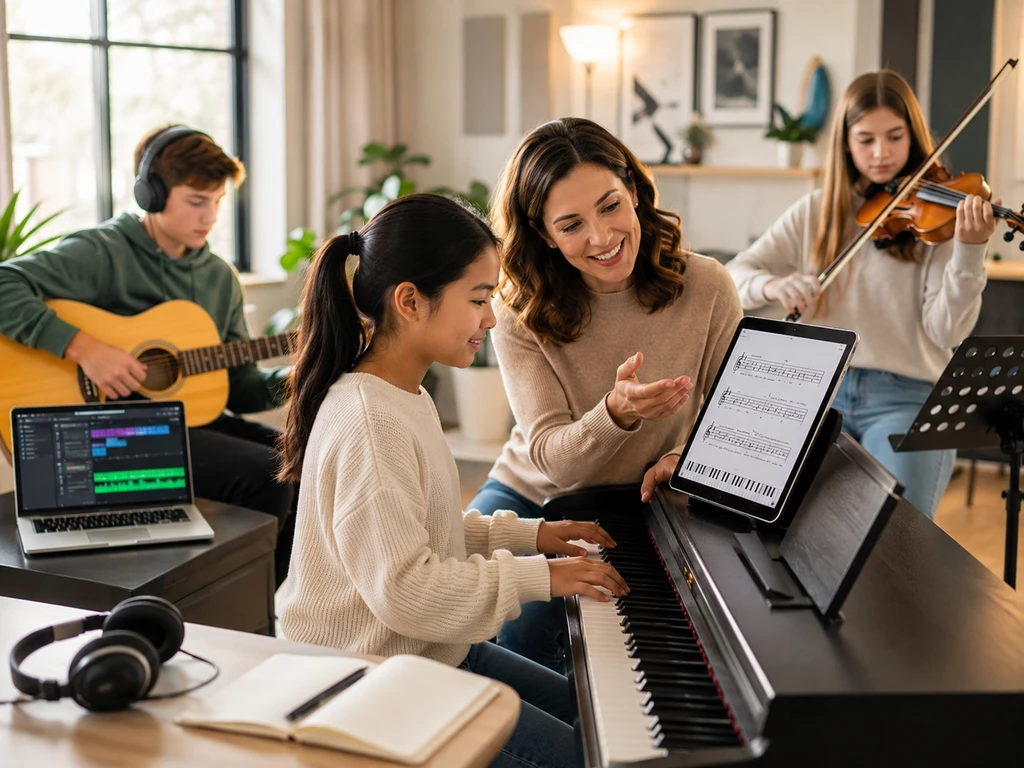
Music education is changing quickly. In 2026, students have access to more digital tools than ever before. Apps, online videos, virtual practice tools and AI-assisted learning platforms can help students explore music in new and exciting ways.
But even with all these new tools, one thing has not changed: music is still deeply human. Learning an instrument or developing the voice is not only about hitting the right notes. It is about expression, feeling, confidence, listening and personal connection.
AI can support practice, but it cannot replace the encouragement, emotion and personal care of a real music teacher.
How AI Is Changing Music Learning
AI can help music students in practical ways. It can support practice routines, suggest exercises, create simple backing tracks or help students review basic music theory. For busy learners, these tools can make practice feel more organized and interactive.
For example, a piano student may use a digital tool to slow down a song. A guitar student may use an app to follow chords. A voice student may record themselves and listen back more carefully. These tools can make learning easier between lessons.
Helpful Ways Students Can Use Music Technology
- Practicing rhythm and timing at home
- Listening to backing tracks for confidence
- Recording practice sessions for review
- Learning simple theory concepts visually
- Exploring different sounds, styles and instruments
- Staying motivated between weekly lessons
Why Human Music Teachers Are Still Essential
Technology can give information, but a teacher understands the student. A good music teacher can notice posture, hand position, breathing, confidence level, emotional expression and learning style. These details are often the difference between simply playing notes and truly making music.
A teacher also knows when to slow down, when to challenge a student and when to encourage them. This kind of personal support is especially important for children, beginners and adult learners who may feel nervous about starting music lessons.
The best music learning experience in 2026 is not AI instead of teachers. It is smart technology guided by real human teaching.
The Best Balance: Technology Plus Teacher Guidance
The strongest approach is not to reject technology. Instead, music academies can use digital tools in a healthy and balanced way. AI and apps can support practice, while teachers provide direction, correction, emotional support and artistic development.
This balance helps students enjoy modern learning without losing the personal connection that makes music special. It also helps parents and adult learners understand that technology is a tool, not the whole lesson.
A Healthy Music Learning Routine in 2026
- Attend regular lessons with a qualified music teacher
- Set clear weekly practice goals
- Use digital tools only when they support the lesson plan
- Record short practice sessions to track progress
- Review challenges with the teacher during the next lesson
- Focus on expression, not only technical accuracy
How AI Can Help Children Learn Music
For children, technology can make music learning more playful and visual. Simple rhythm games, listening tools and practice reminders can help children stay engaged. However, children still need a teacher who can guide them with patience and warmth.
A teacher can understand when a child is confused, tired, shy or excited. They can adjust the lesson in real time and keep the learning experience positive. This emotional awareness is something technology cannot fully replace.
What Children Still Need from a Real Teacher
- Encouragement and emotional support
- Clear correction in a kind way
- Fun, age-appropriate lesson activities
- Help with posture, technique and listening
- Confidence-building through small achievements
How AI Can Support Adult Music Learners
Adult students often have busy schedules. For them, digital tools can be useful for short practice sessions at home. They can review chords, listen to exercises or practice with a metronome when they have free time.
Still, adults also benefit from teacher feedback. Many adult beginners worry that they are too late to start or not talented enough. A supportive teacher can help them move past this fear and enjoy the process step by step.
Useful Tools for Adult Learners
- Practice timers
- Metronome apps
- Backing tracks
- Recording tools
- Online sheet music support
- Simple music theory apps
What Makes a Modern Music Academy Different?
A modern music academy should respect both tradition and technology. Students need strong fundamentals, but they also need learning methods that feel current, flexible and engaging.
The best music academy in 2026 is one that uses technology carefully while keeping the teacher-student relationship at the centre. This creates a learning environment where students feel supported, inspired and confident.
What Parents and Students Should Look For
- Qualified and patient music teachers
- Personalized lesson plans
- Creative learning methods
- Balanced use of digital tools
- Programs for children, teens and adults
- A warm and encouraging academy environment
Final Thoughts
AI and music technology are becoming part of modern music education, but they should not replace the heart of learning. Music is about more than information. It is about feeling, creativity, discipline, confidence and connection.
In 2026, the best way to learn music is through a balanced approach. Digital tools can support practice, but real teachers help students grow as musicians and as people. With the right guidance, students of all ages can use technology wisely while still experiencing the true joy of music.
FAQ
1. Can AI replace a music teacher?
No. AI can support practice, but a real teacher provides feedback, encouragement, correction and emotional understanding.
2. Is AI useful for beginner music students?
Yes. AI and music apps can help beginners practice rhythm, review simple theory and stay motivated between lessons.
3. Should children use music learning apps?
Children can use music apps in moderation, but they still need teacher guidance, structure and personal support.
4. How can adults use technology for music practice?
Adults can use metronome apps, recording tools, backing tracks and practice reminders to support regular learning.
5. What is the best way to learn music in 2026?
The best approach is a mix of teacher-led lessons, regular practice and smart use of helpful digital tools.