


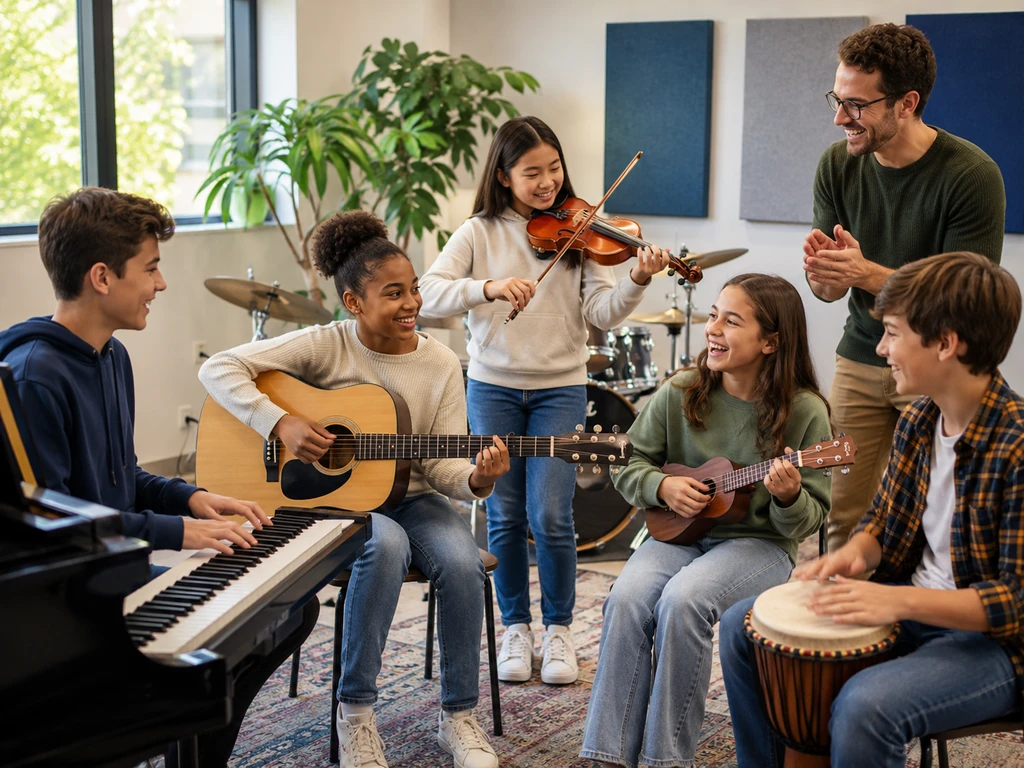
Music is often seen as a personal skill, but it can also be a powerful social experience. When students learn music in a group setting, they do more than practice notes, rhythm or songs. They learn how to listen, cooperate, take turns and feel part of something creative.
Group music classes can be especially helpful for children, teens and beginner students who enjoy learning with others. A music academy can create a warm and structured environment where students feel supported, motivated and excited to participate.
Group music classes help students understand that music is not only something you perform. It is something you share.
What Makes Group Music Classes Different?
Private lessons are great for focused personal progress, but group lessons offer a different kind of learning experience. In a group class, students hear each other, respond to each other and learn how their part fits into a bigger sound.
This is one of the most valuable parts of music education. Students begin to understand timing, teamwork and communication in a natural way. They are not only learning from the teacher. They are also learning from classmates.
Common Group Music Class Activities
- Rhythm games and clapping exercises
- Group singing and vocal warm-ups
- Simple ensemble playing
- Call-and-response music activities
- Beginner instrument practice
- Listening and movement exercises
Group Lessons Help Students Build Confidence
Many students feel nervous when they first start music lessons. They may worry about making mistakes or playing in front of others. Group classes can help reduce this pressure because everyone is learning together.
When students see classmates trying, improving and making mistakes too, they often feel more relaxed. They begin to understand that mistakes are part of learning. This can make them more willing to participate and express themselves.
How Confidence Grows in a Group Setting
- Students start by joining simple activities
- They become comfortable making sounds with others
- They learn that mistakes are normal
- They receive encouragement from the teacher and classmates
- They gradually feel ready to perform or lead small parts
A supportive group class can turn nervous beginners into confident young musicians.
Music Classes Improve Listening Skills
Listening is one of the most important skills in music. In group classes, students must listen to the teacher, the rhythm, the melody and the other students around them. This helps them become more aware of sound and timing.
Good listening also supports better teamwork. When students play or sing together, they learn when to come in, when to pause and how to stay connected with the group. These skills can also support classroom learning and everyday communication.
Listening Skills Students Can Develop
- Recognizing rhythm patterns
- Following musical cues
- Matching pitch and volume
- Understanding tempo changes
- Waiting for the right moment to play or sing
Group Music Lessons Encourage Friendship
Music can make it easier for students to connect with others. In a group class, students share the same activity, the same goal and often the same excitement. This can help friendships grow naturally.
For children who are shy or new to a community, group music classes can be a gentle way to meet others. They do not need to start with long conversations. They can connect through rhythm, songs, games and shared musical moments.
Why Music Helps Social Connection
- Students work toward a shared goal
- They celebrate progress together
- They learn to support each other
- They share creative experiences
- They feel part of a positive learning community
Teamwork Becomes Part of the Lesson
In music, every part matters. One student may keep the rhythm, another may sing the melody and another may play a simple instrument. When these parts come together, students can hear how teamwork creates something beautiful.
This teaches an important life lesson. Students learn that their role matters, but they also learn to respect the roles of others. They begin to understand cooperation, patience and responsibility in a creative way.
Teamwork Skills Learned Through Music
- Taking turns
- Following a leader
- Supporting classmates
- Practicing patience
- Working toward a group performance
- Respecting different learning speeds
Are Group Music Classes Only for Children?
No. Group music classes can also be great for teens and adults. Adult learners may enjoy group lessons because they feel less pressure than private lessons. They can meet people with similar interests and enjoy music as a shared hobby.
For adults, group classes can be a refreshing break from daily routine. Whether they are learning guitar, voice, piano, ukulele or handpan, the social side of music can make lessons more enjoyable and motivating.
Who Can Benefit from Group Music Classes?
- Young children starting music for the first time
- Shy students who need a supportive environment
- Teens interested in bands or ensemble playing
- Adults looking for a creative social activity
- Beginners who enjoy learning with others
Choosing the Right Group Music Program
A good group music program should feel organized, friendly and age-appropriate. The teacher should be able to guide the class while giving each student enough attention. The goal is not to rush progress. The goal is to help students enjoy music while building real skills.
Parents and students should look for a music academy that offers a positive atmosphere, clear lesson structure and programs for different ages and levels.
What to Look For in a Group Class
- Small or well-managed class sizes
- Patient and encouraging teachers
- Age-appropriate activities
- Clear musical goals
- A balance of fun and learning
- Opportunities for students to participate actively
Final Thoughts
Group music classes offer more than musical instruction. They help students become more confident, social, focused and cooperative. Through rhythm, songs, instruments and shared practice, students learn how to listen, participate and work with others.
For families and adult learners looking for a fun and meaningful way to start music, group lessons can be a wonderful choice. With the right teacher and supportive academy environment, students can build musical skills while enjoying friendship, creativity and teamwork.
FAQ
1. Are group music classes good for beginners?
Yes. Group music classes can be excellent for beginners because students learn in a supportive environment with others at a similar level.
2. What age is best for group music lessons?
Group music lessons can work for children, teens and adults. The best class depends on the student’s age, interest and experience level.
3. Do students still get enough attention in group classes?
A well-structured group class gives students both shared activities and individual guidance from the teacher.
4. Are group lessons better than private lessons?
They are different. Private lessons offer personal focus, while group lessons build confidence, teamwork and social connection.
5. What instruments work well in group music classes?
Voice, ukulele, guitar, piano basics, hand drums, recorder and beginner rhythm instruments can all work well in group settings.